Hormesis and Toxicity
Hormesis
Hormesis is when a large dose is bad but a small dose is good. “Antifragility” is similar. Exercise is the classic example: if you lift weights it tears your muscles a little, but they build back stronger. Getting a little bit of “muscle tearing” every day is way better than never getting any. Other examples:
- getting too hot or cold (sauna/cold plunge)
- ingesting trace minerals like selenium, zinc, copper (you need a little bit certainly not a lot)
- sunlight (vitamin D and nitric oxide from some sun is good, but sunburn is bad)
- forest fires keeping forests healthy
- “creative destruction” in economics
Toxicity
Toxicity is when a large dose is bad and a small dose is also bad. “Allostatic Load” is similar. Examples:
- ingesting lead, mercury, cadmium, or PFAS (doesn’t help the body at all)
- poison ivy (repeated exposure usually makes it worse)
- hypersensitivity (e.g. when your toddler is doing something minorly annoying for the 1000th time and it drives you nuts)
- rust, corrosion, erosion (if the wind wears away 0.1" of the cliff every year, it’s not like it makes the cliff stronger)
What about them?
It’s important to distinguish between them accurately! Imagine if you thought muscle soreness was a “toxicity” problem and you never exercised. Or if you thought you should eat a little mercury every day to prevent mercury poisoning.
But it’s extra hard to distinguish between them in psychology. Probably a lot of things are hormetic:
- “Exposure therapy” for a lot of fears/anxieties: explicitly hormesis
- Building any skill or learning anything is hormesis
- Most emotions are hormetic (I think? The entire therapyverse is devoted to “all feelings are ok”, and indeed, being shut off from them seems to point to a bad life.)
- Even things we lump under “trauma” may be hormetic (intense experiences when safe and controlled are fine, we just use the word “trauma” for when you get a large dose and it’s bad)
What’s toxic? Maybe depression, ennui, or existential dread/angst? Look at the most flourishing people you know; they do have the full range of emotions including sadness, but they don’t seem to have any dose of the muddy stuck blahs that depressed folks have. And depression seems to be self-reinforcing: you don’t do all the outgoing active social things that might pull you out of depression.
One reason it’s hard to distinguish is that “bad” includes both toxic things, and hormetic things where you’ve just been getting too high a dose. E.g. sunburn is toxic, but sun exposure is hormetic, so maybe it’s more fair to say “sun is hormetic but sunburn indicates you’re getting out of the hormetic range.”
I don’t have much of a conclusion here. Make sure you know what’s hormetic and what’s toxic.1
With the taste of your lips, I’m on a ride / You’re toxic, I’m slippin’ under / With a taste of the poison, paradise / I’m addicted to you but really you’re hormetic / Large doses are bad but a bit is terrific ↩︎
What I Did Yesterday
- got kid up and dressed
- made breakfast for all 3 of us
- went to pharmacy to pick up med for kid but was too early
- went to gym
- went to another store
- went to grocery store
- went to staples because my one amazon return at whole foods magically couldn’t be returned there
- went home, wolfed down lunch, made lunch for kid
- 2hr online class
- 2 loads of laundry
- roasted squash and broccoli
- woke up kid, took him to library
- took him to merry go round
- took him back to pharmacy to actually get the drug this time
- took him home, picked peppers and tomatoes with him
- cooked dinner for tonight (chicken, peppers, onions) and a squash soup for later this week while I’m out of town
- ate dinner, cleaned up kitchen
- cooked green bean dish for this week too
- got laundry, made up bed
- folded second load of laundry
- packed for weeklong work trip
This was a little more than an average amount of work for a weekend day. By bedtime I was barely coherent and my eyes weren’t fully focusing normally. I wonder how everyone makes it work. I have some hypotheses:
- most parents just have less work than this! some of this is my own doing; I should order more takeout food and just care less about whatever errands or laundry don’t get done.
- most parents have about this much work but they feel better about it. maybe they feel pride in their work or joy from the kid time that gives them energy.
- most parents have about this much work but they just have more energy to start with so it’s fine
- all parents are just dying all the time.
Counter-arguments to each:
- tell me which of those I should skip! The gym is optional but feels like a bad idea to skip. The class was optional, and maybe I will bail on it at some point, but it was also the easiest part of the day. I don’t know how I could skip much on laundry or food. We already order takeout sometimes, and this is all reasonably easy “stuff in a pot” type food.
- Eh, maybe. But I had some joy when I was with my son. I was like “ah this is a good moment, he’s happy, I’m doing ok, and I’m glad he’s here with me.” But it didn’t feel restorative at all; at best like a “runner’s high” where you feel good mid-exhaustion.
- I’m so healthy! I am the fittest healthiest 40yo man, I get 7+ hours of sleep, I eat 8/10 perfectly, I exercise daily, even all my blood tests and stuff are perfect. There is no way I’m less than the 80th percentile of parents in terms of physical health.
- Yeah, we joke about this, but it can’t be this. I realize this is not a counterargument! But it can’t!
I was talking with a friend about how work is so different in the US, China (“996”), and France (32 hour work week); and yet, people manage to have happy lives and families in each. How do people manage to scale up and down like this?
I'm Right and I'm Mad
There’s a voice I’m noticing more and more, in myself, that I’m calling “I’m Right and I’m Mad.” It shows up all the time.
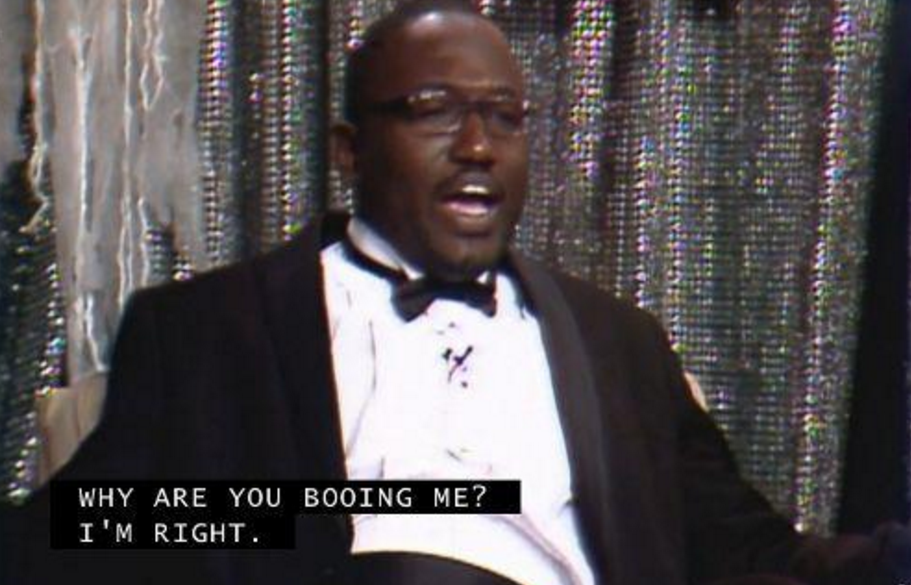
(obv not the same phrasing but a similar feeling.) Here’s what this voice says:
- We’re suffering. (“we” meaning, me and all the little parts of me, I guess)
- I know a way out of suffering.
- Everyone should just listen to me and then we wouldn’t be suffering.
- Because everyone didn’t listen to me, all this isn’t my fault.1
Here are some simple ways it shows up, past and present:
- my dad asks me to help with yard work. I feel obligated. I hate it. “we just shouldn’t be doing all this landscaping! if we didn’t have all this dumb ornamental stuff, we wouldn’t have to do any work! It’s not my fault!”
- I’m playing baseball. I strike out at a key moment and I feel like I’ve let everyone down and it’s terrible. “This was a dumb idea, I don’t even want to play competitive sports, I should just quit and then I won’t suffer like this.”
- we have to pay for unexpected car repairs. “This is dumb; I never even wanted to have a car. Not my fault.”
- we go to the beach and sand gets everywhere. “I didn’t even want to go to the beach. Not my fault.”
A couple interesting points:
- Why do I care if things are my fault?
- This voice doesn’t actually have an answer for everything. E.g. “Just don’t have a car”?? with small kids in a small US city? That would make the bills a little easier and so much of life so much harder!
- It might actually be worse for me to distance myself from things that happen in life.
alignment
I think about work being more or less “aligned” sometimes. Aligned with what? I don’t know, aligned with you. Aligned with what you like, want, love, care about, how you want to be, your visions, your dreams. Very aligned: a doctor who likes figuring out tricky medical cases and loves seeing people get healthier. Not aligned: a doctor who’s doing it because their parents said they should, and now they want to get rich enough to keep up with the Joneses. This is not a brilliant insight here.
But it’s relevant to me now, because the “I’m right and I’m mad” voice is inherently un-aligning. When I work in my garden now, it’s pretty aligned: I like my plants. When I worked with my dad as a kid, it was pretty un-aligned, but then I made it more so by declaring “I want no part of this.” This wasn’t my idea, I would just not have all this landscaping, forget it.
There could be a viewpoint that pushes me towards more alignment with that job: “I’m doing this as a gift for my dad, who I love. And it is nice to see these plants; it’s not a total waste of time.” That would require not pushing away the work, or the suffering; not saying “I wouldn’t set up my life like this so I shouldn’t be responsible for doing the work.”
responsibility
Just always go toward alignment! Easy as that?? Hmm. It is not easy to take a problem that you might push away, and instead make it yours.
I can’t stop thinking about “Resentment is responsibility gone rotten” (despite the therapyspeak; the core idea I mean). One natural conclusion of this whole post could be “I have to take more responsibility for my life.” No, even better: “My life will be easier if I take more responsibility for it.” Easier! What?! But that’s sort of the inevitable conclusion here. If I find myself with a problem, like my dad wanting me to do yard work, and I can transmute it into “I choose to do yard work as a gift to my dad”, I can do more work but suffer less. The feeling might be less of “stuff just happens to me” and more of “on some level, I chose this.”
That is so counterintuitive that I am both rejecting it ferociously AND actually kind of intrigued. It’s so counterintuitive that I haven’t overthought it 100 ways, which means it might actually help.
Now the only hard part is, how to actually do it. In the moment, when I have a new difficulty, how to say “yeah I actually am partially responsible for this and choose to take it on and align myself with it”, not “this sucks and if I had my way I just wouldn’t do it.”
I didn’t try to make this a Four Noble Truths joke, but here we are. I guess instead of “no-self” I just went to “100% self, I’m the best self, I know everything, I should be the king of the world.” I wonder why this makes me sad. ↩︎
- Things on My Mind
- Number Go Up Races
- The Age of Autism is over; the Age of ADHD has begun
- Why Isn't There a Healthy Tanning Bed?
- Why Hold On To Pain
- An Hour in the Life
- Parent Math
- The Biggie Filter
- AI Etc Links
- Debacterol/Oralmedic Post
- Having Real Problems
2026 2025 2024 2023 2022 2021 2020 2019 2018 2017 2016 2015 2014 2013 2012